
Detection of acid phosphatase activity in hemocytes of Biomphalaria glabrata (Gastropoda: Planorbidae): a study in molluscs from Amazon Region, Brazil
DOI:
https://doi.org/10.5123/S2176-62232015000100006Keywords:
Biomphalaria glabrata, Schistosoma mansoni, Hemocytes, Acid Phosphatase, CytochemistryAbstract
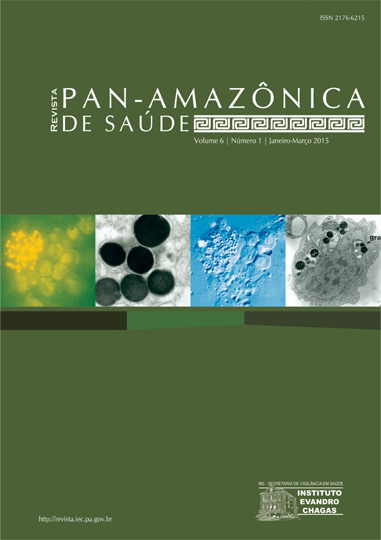
Planorbidae hemocytes of Biomphalaria glabrata were utilized for cytochemical detection of acid phosphatase activity, using acridine orange technique for marking the cytoplasmic acid compartments. This species of snail is the most widely used for studying host-parasite interaction due to greater susceptibility to becoming infected by Schistosoma mansoni, and to be capable of fast parasite multiplication in their tissues, despite the activity of its immune system. The ultrastructural cytochemistry was also used for marking the acid phosphatase activity in cytoplasmic inclusions limited by a membrane. The results show that acridine orange may be a marker for the acid compartments within granulocytes; however, this did not occur in hyalinocytes marking, which may help to distinguish these two types of cells present in the hemolymph of this mollusk. The ultrastructural cytochemistry enabled the visualization of electron dense deposits located within the cytoplasmic granules basically consisting of membranes, confirming the activity of acid phosphatase.
Downloads
Published
How to Cite
Issue
Section


